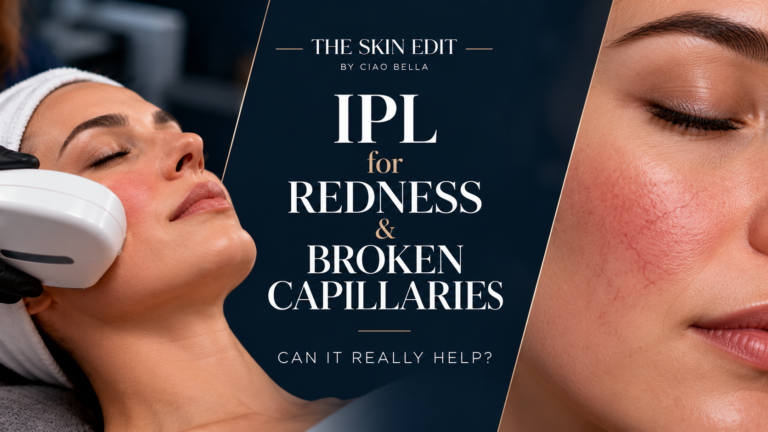
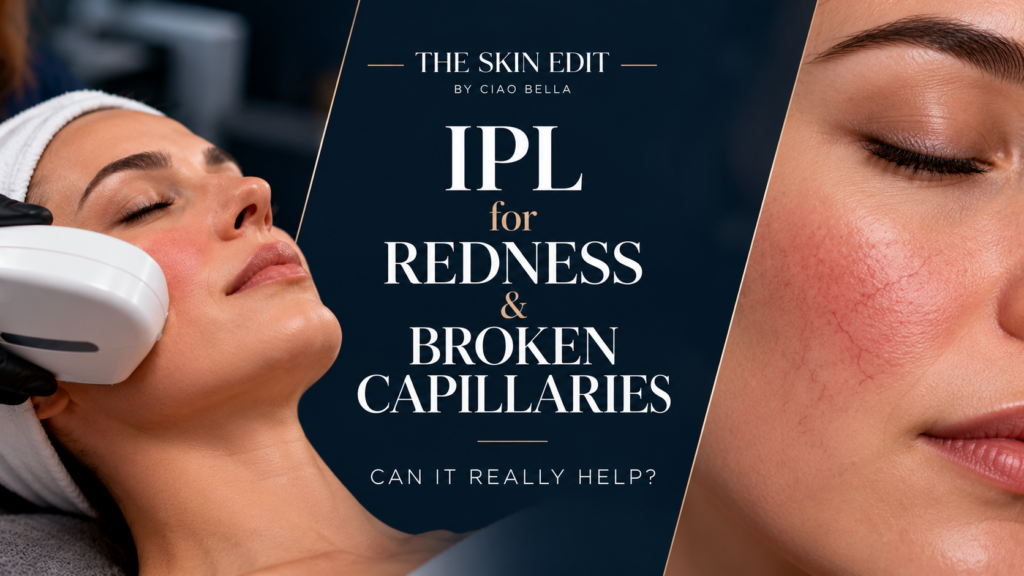
Have you ever looked in the mirror and noticed persistent redness across your cheeks, tiny red lines around your nose, or a complexion that always seems flushed—even when you’re not wearing makeup?
You’re not alone.
Facial redness and visible broken capillaries are common skin concerns. While skincare products can help support sensitive skin, they can’t always address the appearance of visible blood vessels beneath the surface.
That’s where professional light-based treatments come in.
IPL Photofacials aren’t just for sun damage and brown spots. They can also help improve certain types of facial redness and visible blood vessels.
But how exactly does IPL work for redness, and who is a good candidate?
Let’s explore.
Facial redness can develop for several reasons, and understanding the underlying cause is an important first step toward choosing the right treatment.
Some of the most common contributors include:
Years of UV exposure can affect the skin’s supporting structures and contribute to visible blood vessels, redness and uneven skin tone.
This is one reason redness and sun-related pigmentation often appear together.
Rosacea is a chronic inflammatory skin condition that can cause persistent facial redness, flushing and sometimes visible blood vessels.
Common triggers may include heat, alcohol, spicy foods, stress and sun exposure.
Although IPL can improve certain visible symptoms of rosacea, it does not cure the underlying condition.
Those tiny red or purple lines around the nose and cheeks are often called broken capillaries.
The medical term for these visible, widened superficial blood vessels is telangiectasia.
Although they’re commonly described as broken, the vessels are usually dilated rather than physically broken.
Some individuals naturally have more visible facial blood vessels, particularly those with fairer complexions or skin that flushes easily.
Repeated exposure to extreme temperatures, UV radiation and certain environmental triggers may contribute to persistent flushing or the appearance of facial redness.
The important thing to remember is that not all redness has the same cause—and not all redness should be treated with IPL.
IPL stands for Intense Pulsed Light.
Unlike traditional lasers that use a single wavelength, IPL technology delivers a range of light wavelengths that can be filtered to target specific skin concerns.
At Ciao Bella Advanced Aesthetics in Grande Prairie, we use IPL Photofacial technology with a 530 nm filter.
For suitable vascular concerns, light energy is absorbed by hemoglobin, the pigment found in red blood cells.
This absorption produces controlled heat within targeted superficial blood vessels, which can help reduce their visibility over time.
The result?
A complexion that may appear calmer, clearer and more even in tone.
Because IPL can also target certain forms of pigmentation, it may be especially useful for clients experiencing a combination of sunspots and visible redness.
However, the effectiveness and safety of treatment depend on the type of vessel, skin tone, settings used and individual skin assessment.
Yes, IPL can help reduce the appearance of certain superficial facial blood vessels.
These may include:
Not every vessel responds equally.
Some larger or more distinct vessels may be better suited to specialized vascular laser treatments rather than IPL.
This is why a professional consultation is important before beginning treatment.
Rosacea is one of the most common reasons clients inquire about facial redness treatments.
IPL may be helpful for some people experiencing persistent redness or visible blood vessels associated with rosacea.
However, there are a few important distinctions.
IPL can improve certain visible symptoms of rosacea, but it does not cure rosacea.
Rosacea can involve inflammation, sensitivity, flushing, bumps and other symptoms that may require medical assessment or treatment.
Clients experiencing active irritation or uncontrolled rosacea may need to address those concerns before considering light-based procedures.
A personalized approach is essential.
If you suspect you have rosacea but haven’t been diagnosed, we recommend speaking with a qualified healthcare professional.
One of the most common questions we hear is:
Will one IPL treatment get rid of my redness?
The answer depends on several factors.
The severity of the redness, type of blood vessels, skin characteristics and individual response all influence how many treatments may be recommended.
Some clients notice visible improvement after an initial treatment, while others benefit from a series of appointments.
For persistent redness or more extensive vascular concerns, multiple treatments are often needed.
It’s also important to understand that new vessels or redness may develop over time, particularly when the underlying cause is ongoing.
Our goal isn’t to promise perfect skin after one appointment. It’s to create a realistic treatment plan based on your individual concerns.
Most clients describe IPL as a quick snapping or warming sensation against the skin.
The level of discomfort varies depending on the treatment area, settings and individual sensitivity.
Following treatment, you may experience temporary redness, warmth or mild swelling.
Some visible vessels may appear temporarily more noticeable before gradually improving.
Your provider will explain what to expect based on your treatment.
One reason IPL is popular is that many clients can return to their normal daily activities relatively quickly.
However, minimal downtime doesn’t mean no recovery.
Following treatment, you may experience:
These effects often improve over the following days, although individual recovery varies.
Sun protection and appropriate aftercare are essential.
Your provider will recommend which skincare products to use and which active ingredients to temporarily avoid while your skin recovers.
This is an important distinction.
A well-formulated skincare routine can support the skin barrier, improve hydration and help reduce irritation that contributes to visible redness.
However, topical skincare products generally cannot eliminate established, dilated facial blood vessels.
That’s where treatments such as IPL or vascular lasers may be considered.
For clients experiencing sensitivity or redness, gentle cleansing, barrier-supporting moisturizers and daily sunscreen are important parts of an overall skin management plan.
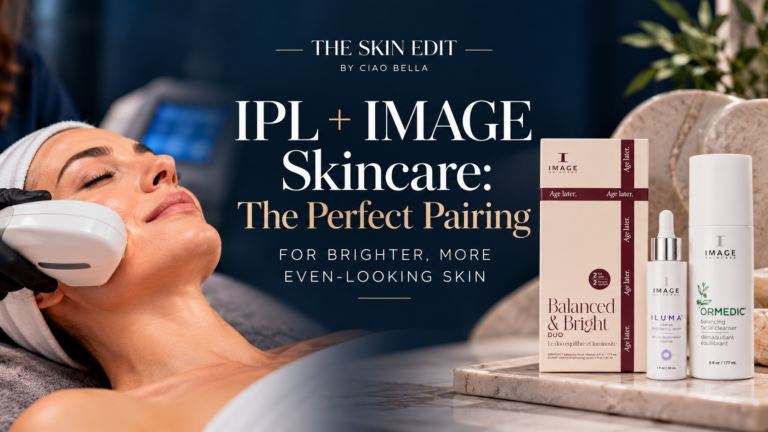
Skincare and professional treatments serve different purposes, but they can complement one another.
As summer comes to an end, many clients begin noticing the effects of accumulated sun exposure.
Brown spots may look more prominent, facial redness may be more noticeable, and uneven skin tone can become a growing concern.
Fall is often a convenient time to begin IPL because clients may find it easier to limit direct sun exposure.
However, IPL requires careful attention to recent tanning, sun exposure and ongoing UV protection regardless of the season.
Even during Grande Prairie’s colder months, daily sunscreen remains essential.
IPL may be worth exploring if you’re concerned about persistent facial redness, small visible blood vessels or uneven skin tone.
However, not everyone is a suitable candidate.
Certain skin types, recent tanning, medications, medical conditions and causes of redness may affect treatment suitability.
Some pigmentation disorders, including melasma, also require special caution with light-based treatments.
A proper assessment helps determine whether IPL is appropriate or whether another approach would be more beneficial.
Persistent facial redness and visible capillaries can be frustrating, especially when your skincare routine doesn’t seem to make a difference.
While not every type of redness can be addressed with IPL, the treatment can be a valuable option for improving certain vascular concerns and creating a more even-looking complexion.
At Ciao Bella Advanced Aesthetics, we believe in understanding what’s happening within your skin before recommending a treatment.
Because effective skincare isn’t about treating every concern the same way.
It’s about choosing the right technology for the right skin concern.
If you’re concerned about visible capillaries, sun-related redness or uneven skin tone, our team can help assess your skin and determine whether an IPL Photofacial may be suitable for you.
Book your IPL Photofacial consultation at Ciao Bella Advanced Aesthetics in Grande Prairie.
Individual results vary. IPL is not suitable for all causes of facial redness or all skin types. Persistent or unexplained redness should be medically evaluated when appropriate.