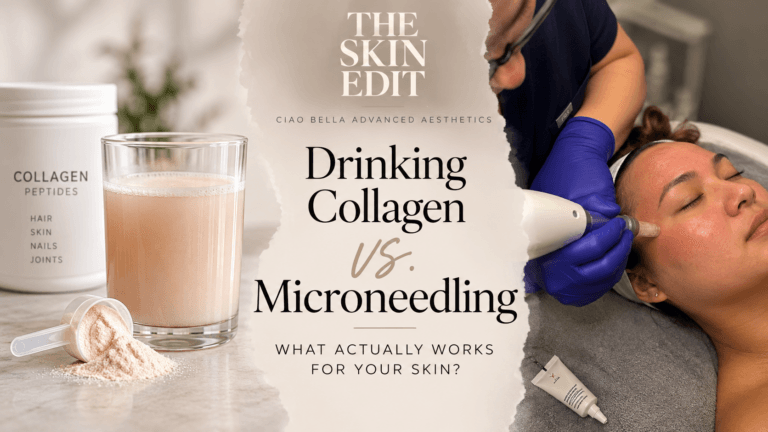
Collagen is everywhere right now.
It’s in powders, gummies, coffee creamers, protein blends and expensive “beauty from within” supplements — all promising firmer, smoother, younger-looking skin.
But if your goal is to actually improve the appearance of aging skin, fine lines, texture or acne scarring, there’s an important distinction to understand:
Eating collagen and stimulating collagen directly within your skin are not the same thing.
And despite what social media might have you believe, the science around collagen supplements is a little more complicated than the marketing.
Collagen is one of the major structural proteins in your skin. Think of it as part of the framework that helps give skin its strength, firmness and support.
As we age, the skin’s collagen structure and production change. Environmental factors such as UV exposure can contribute to that process as well. Over time, we begin to notice the visible effects: fine lines, laxity, changes in texture and a loss of that firm, resilient quality associated with younger skin.
So naturally, the beauty industry asked:
If we’re losing collagen, why don’t we just drink more of it?
Unfortunately, our bodies aren’t quite that simple.
When you consume hydrolyzed collagen, your digestive system breaks those proteins down into smaller peptides and amino acids that can be absorbed and used throughout the body.
In other words, your collagen drink doesn’t travel directly to your forehead and fill in a wrinkle.
Your body ultimately determines how those nutrients are utilized.
That doesn’t mean oral collagen supplements are useless.
Some systematic reviews and randomized trials have reported improvements in measures such as skin hydration and elasticity with collagen supplementation. However, the quality of the evidence isn’t completely settled. A 2025 meta-analysis found that although pooled studies appeared to show benefits, those benefits disappeared when researchers looked specifically at higher-quality studies and studies without pharmaceutical-industry funding.
So our take isn’t:
“Collagen supplements don’t work.”
It’s:
And that’s an important distinction when deciding where to invest your skincare dollars.
Rather than supplying your body with nutritional building blocks and hoping for a skin benefit, microneedling creates a controlled response directly within the area we’re trying to improve.
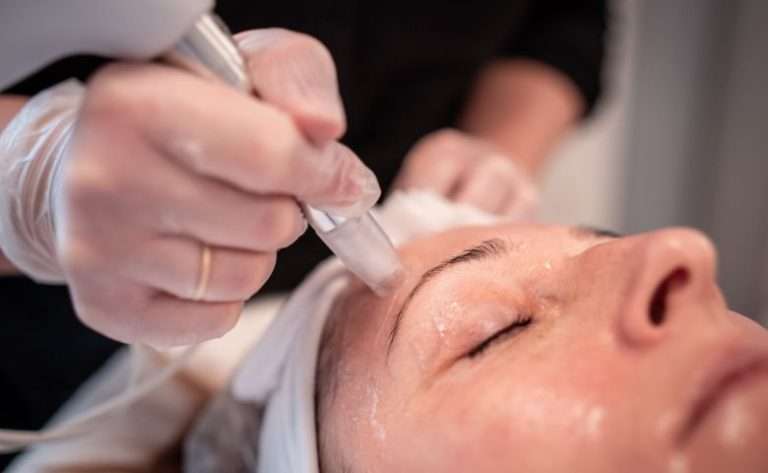
Professional microneedling uses tiny sterile needles to create controlled microchannels in the skin.
The body recognizes those micro-injuries and initiates its natural wound-healing response. That process involves growth factors and cellular activity associated with the formation and remodeling of collagen. This is why microneedling is also referred to as collagen induction therapy.
We’re essentially giving the skin a very specific message:
It’s time to repair and remodel.
And we’re delivering that message exactly where we want the response to occur.
This is where we think skincare marketing sometimes creates unnecessary confusion.
A collagen supplement is nutrition.
Microneedling is a professional skin-remodeling treatment.
They aren’t really competitors, and choosing one doesn’t mean you can’t do the other.
If you enjoy adding collagen peptides to your morning routine, you don’t necessarily need to throw them away. There is some evidence suggesting potential skin benefits, although more independent, high-quality research is needed.
But if you’re specifically trying to improve visible concerns such as:
…then we’re talking about a very different goal than simply supplementing your diet.
Microneedling has been studied specifically as a skin treatment, with evidence supporting its use particularly for acne scarring and skin rejuvenation, although researchers continue to call for larger, standardized clinical trials.
One of the biggest misconceptions we see with professional skin treatments is the expectation of an immediate final result.
Microneedling doesn’t work by temporarily making the skin look tighter.
We’re asking the skin to go through a biological repair and remodeling process — and biology takes time.
That’s why we don’t judge a microneedling treatment solely by how your skin looks a few days later. Improvements can continue developing after the initial redness and recovery period have passed. Research examining skin after a course of microneedling has documented changes in newly synthesized collagen over subsequent months.
At Ciao Bella, we often recommend microneedling as a series rather than a one-and-done treatment, depending on the client’s skin, goals and treatment plan.
September marks the beginning of what we affectionately call microneedling season.
Professional treatments require diligent sun protection, and the cooler months can make it easier for many clients to plan around sun exposure and outdoor activities.
Starting a series in the fall also gives your skin time to work through the gradual remodeling process over the months ahead.
It’s less about chasing an overnight transformation and more about investing in what your skin can become over time.
Not necessarily.
If you enjoy it, it fits your nutrition plan and your healthcare provider has no concerns about the supplement you’re taking, there may be reasons you choose to continue.
We just don’t want a scoop of collagen powder to be confused with a treatment designed to create a controlled remodeling response within the skin itself.
Your collagen powder isn’t necessarily useless. But it isn’t doing the same job as microneedling.
And understanding that difference is exactly what The Skin Edit is about.
Less hype.
Better information.
Smarter decisions for your skin.
Ready to start your microneedling series?
Book your consultation or microneedling treatment with Ciao Bella Advanced Aesthetics.